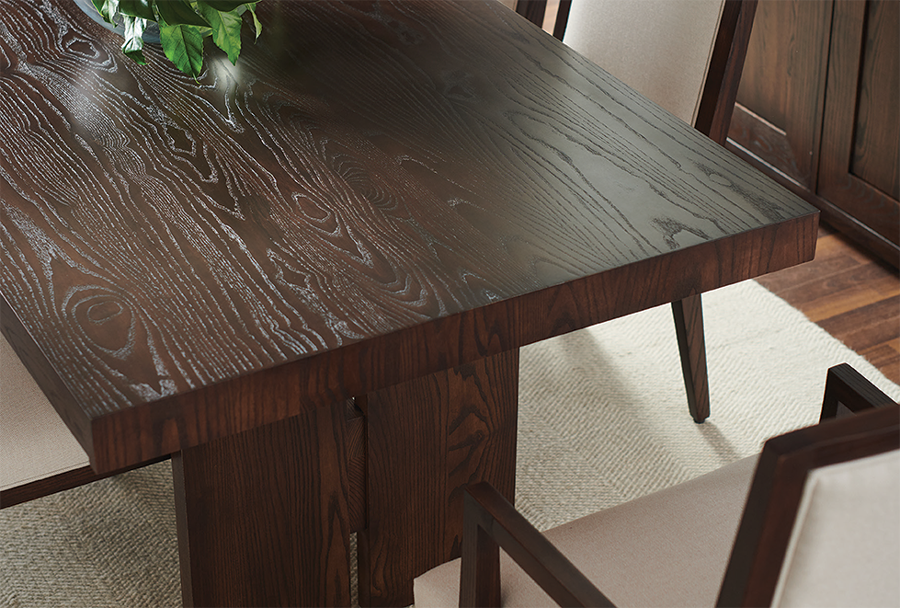
That deep connection you feel for solid hard- wood furniture? It isn’t random.
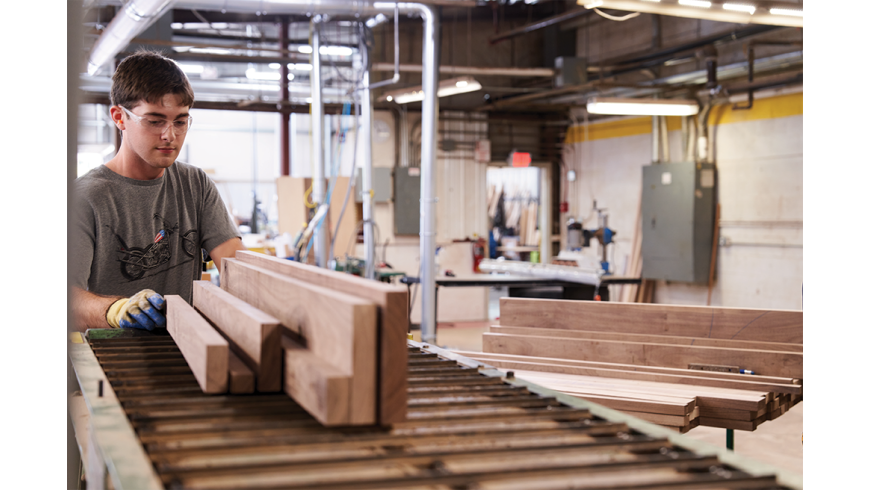
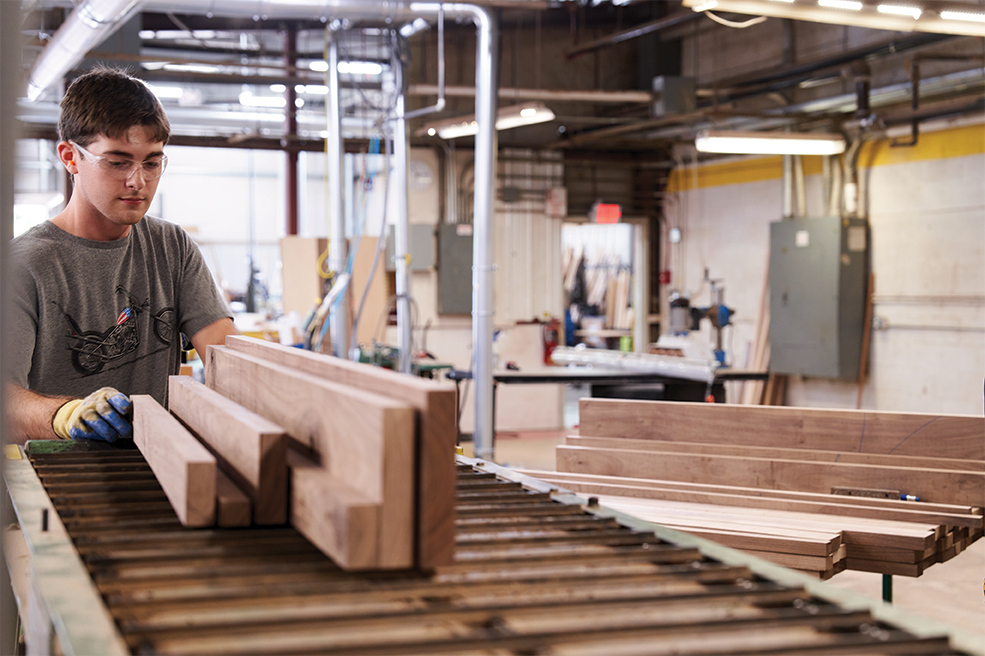
You’re considering two dining tables. One is made of solid hardwood (our Ranch Table in walnut, forinstance). The other is made of plywood or MDF covered with a glossy walnut veneer; pretty enough,but the vibe is noticeably less engaging than the Ranch Table and you’re not sure why.
Gat Caperton cut to the chase: “It has no soul. The veneer is cut into ten slices that are arranged just so. It’s the AI of wood furniture, the aggregate of average.”
Veneer may make for a predictable, uniform look, but it doesn’t retain the character and irresistible stamp nature imparts on solid hardwood; an effect Caperton calls “slow furniture.” Nature’s magic takes time, and that magic often gets lost in mass production.
All of the hardwood lumber Gat Creek uses reflects the life the tree lived in the Appalachian high country; every drought, every wet spring, every sub-zero winter and the tree’s self-defense against these influences. When Gat Creek selects lumber to build furniture it’s not to erase that history but to curate it. No two tables crafted from those planks will ever be identical. The table you choose has never existed before and never will again.
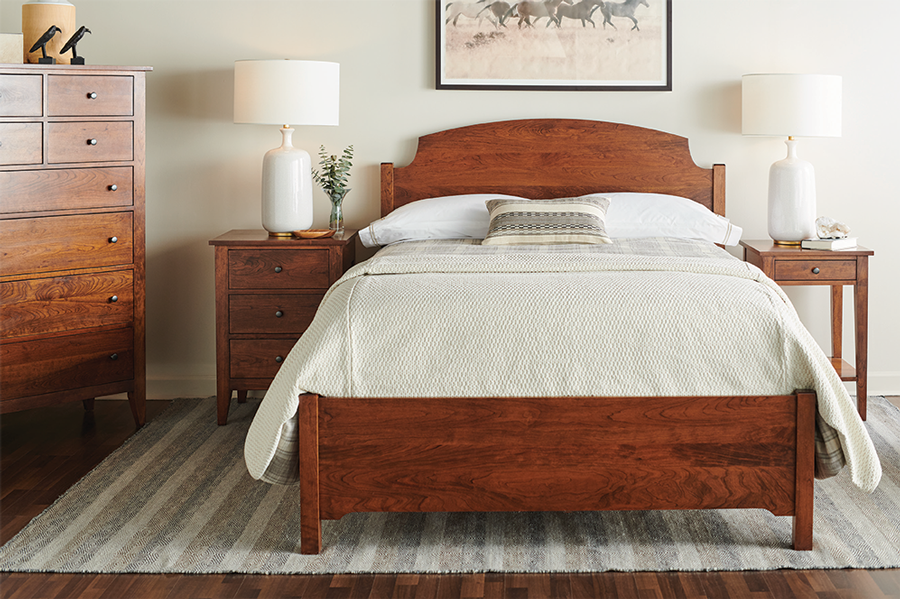
Solid hardwood, shaped by the randomness of nature.
The oneness story gets deeper. Each of Gat Creek’s hardwood species has its own unique qualities shaped by nature. Maple is creamy, light and smooth with periodic grain variations that can be wavy, curly or dramatic, like bird’s eye. Pitch pockets are common in cherry, small seasonal cracks in white oak are greeted with delight by woodworkers, walnut’s rich color variations and “wow factor” graining are widely cherished. Each species is uniquely distinct from the other.
For customers considering wood species, Caperton suggested thinking in terms of tone and texture. “With solid wood there’s color that can be warmer or cooler, and grain tones, which can be subtle or more pronounced. Maple is very smooth, for instance, which is why we frequently use it for our paint and jazzier finishes. Cherry has a tighter, finer grain and walnut tends toward more dramatic grain. Cherry is a lighter color that grows darker over time. Walnut starts darker and lightens through the years.”
Character is earned, not programmed into a veneer-cutting machine.
Time is the great differentiator with solid hardwood. Gat Creek builds that table to last for generations, so it becomes a diary of sorts, documenting the life of the family who lives with it. Thinking in those terms, Caperton noted, “White Oak and Ash are earthier with more open graining, which makes them a wonderful choice for camouflaging the turmoils of life. The dings and nicks that inevitably happen when you live with furniture and not treat it like a museum piece, those things just add to the beauty.”
Therein lies that essential connection — or soul, as Gat Caperton says — we feel with solid wood furniture that mass produced furniture can never possess. That veneered table peaks in the showroom. The solid hardwood Ranch Table arrives in your home more authentically beautiful, and just keeps getting better.